Image-Guided Superficial Radiation Therapy
The Value of IG-SRT
When most people hear the words skin cancer treatment, they immediately think of surgery. For many patients, surgery is an excellent option, and often the right one. Fortunately today, it isn’t the only option for patients wanting a different approach.
During my residency, I had the opportunity to see radiation in action as a skin cancer treatment. In most instances, the success right was very high. However, occasionally cancers were under-treated with a recurrence later or over-treated with significant skin breakdown. I felt like the idea was awesome for those uninterested in surgery, but in need of some fine-tuning. The future is today. In recent years, a newer, highly precise treatment called Image-Guided Superficial Radiation Therapy (IG-SRT) has become an important alternative for select skin cancers. For the right patient and the right situation, IG-SRT can offer excellent outcomes with a gentle, non-surgical approach.
What is IG-SRT?
IG-SRT is a form of low-energy radiation used to treat certain non-melanoma skin cancers, such as basal cell carcinoma and squamous cell carcinoma. What makes it different from older radiation techniques like the ones I used in residency is the image guidance.
Before each treatment, high-resolution ultrasound imaging is used to:
Measure the exact depth of the skin cancer
Confirm the treatment area
Adjust therapy to match the tumor precisely
This means treatment is tailored to your skin cancer—not a one-size-fits-all approach. Patients don’t receive a generic “once size fits all” radiation dose. Every patient receives a specific dosage based on the cancer type AND the cancer depth. With that addition, we feel confident are treated at the proper dose—not too much, not too little.
Why might someone choose IG-SRT?
For many patients, the appeal of IG-SRT comes down to three core values: precision, comfort, and preservation.
1. An effective non-surgical option
IG-SRT does not involve cutting, stitches, or anesthesia. Treatments are quick, painless, and performed in the clinic. Studies show that for select early skin cancers treated with IG-SRT, more than 99 in 100 tumors remain controlled long-term. This can be especially appealing for patients who:
Prefer to avoid surgery
Have medical conditions that make surgery higher risk
Are on blood thinners
Have had multiple surgeries in the past, something I call “surgery fatigue”
2. Excellent cosmetic outcomes
Because there is no incision, IG-SRT often results in minimal scarring. This can be particularly valuable for skin cancers on:
The face
Nose
Ears
Lips
Lower legs
Preserving normal skin structure while effectively treating cancer is one of the major strengths of this therapy. Patients love the idea of curing cancer with the same success rate as surgery but with no knife involved.
3. Thoughtful, image-guided precision
The use of ultrasound imaging allows us to treat just the tissue that needs treatment—no more and no less. This added level of accuracy helps protect surrounding healthy skin and improves confidence in treatment delivery.
Is IG-SRT right for everyone?
No, and that’s an important part of this conversation.
IG-SRT is not a replacement for surgery, and it is not appropriate for every skin cancer. Factors such as:
Cancer type
Size and depth
Location
Prior treatments
Patient preferences
all play a role in deciding the best option. I have had patients incredibly interested in IG-SRT who unfortunately not receive it due to some of the factors just listed.
Our philosophy is simple: the right treatment for the right patient at the right time. Sometimes that is surgery. Sometimes it is topical therapy. And sometimes, IG-SRT is an excellent fit.
A patient-centered approach to skin cancer care
The most important part of any treatment plan is not the technology—it’s the conversation.
If IG-SRT is something you are considering, we believe you deserve:
Clear explanations
Honest discussion of pros and cons
Time to ask questions
A recommendation based on your situation—not a sales pitch
Our goal is always the same: effective cancer treatment, delivered thoughtfully, with respect for your comfort, appearance, and peace of mind.
Below is an example of a patient treated with IG-SRT. While results vary and treatment is individualized, cases like this help illustrate how non-surgical therapy can effectively treat skin cancer while preserving surrounding tissue.
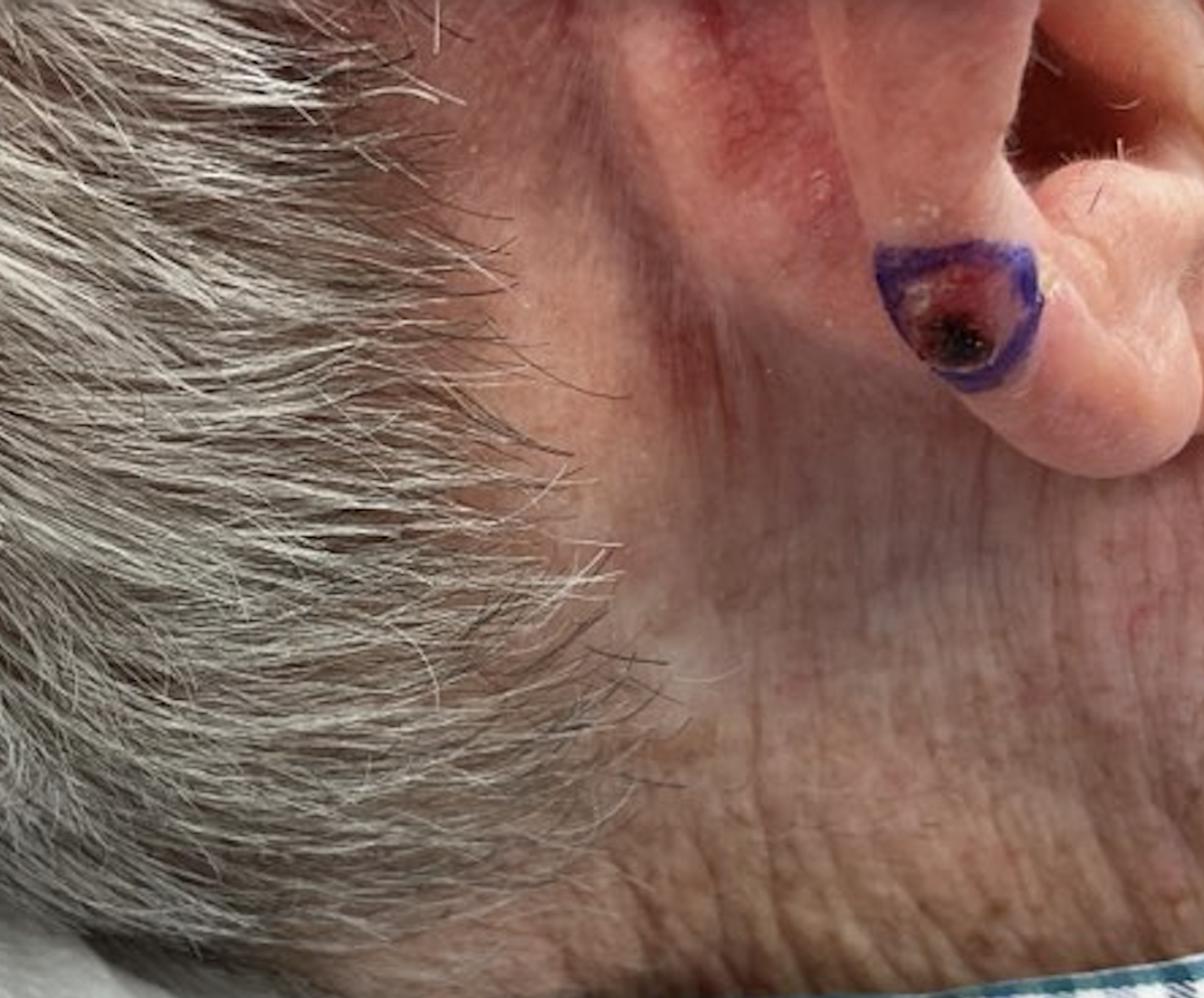
Biopsy site on the right ear of a basal cell carcinoma.
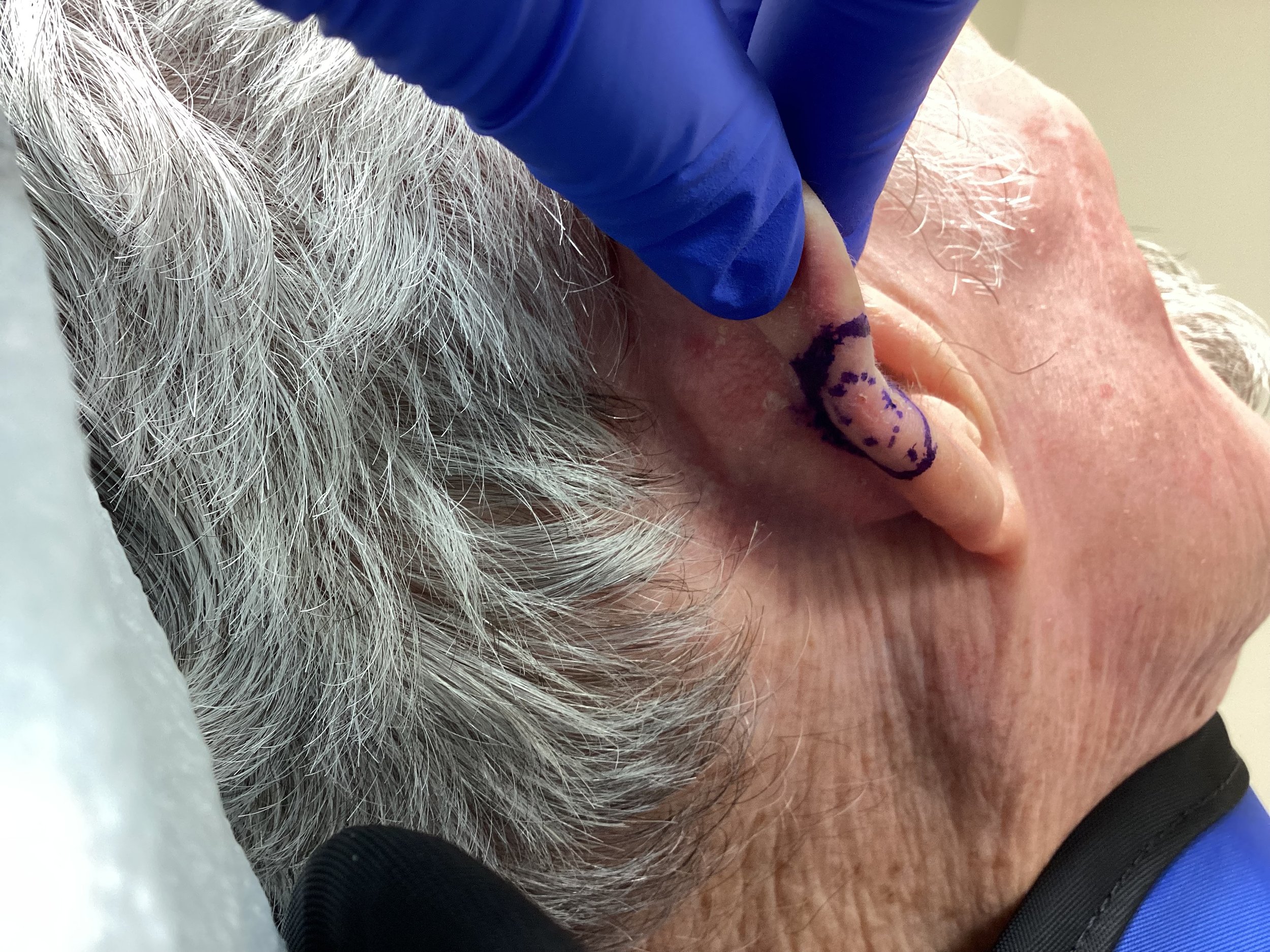
Patient at his first radiation visit where the cancer was identified and proper margins were drawn.
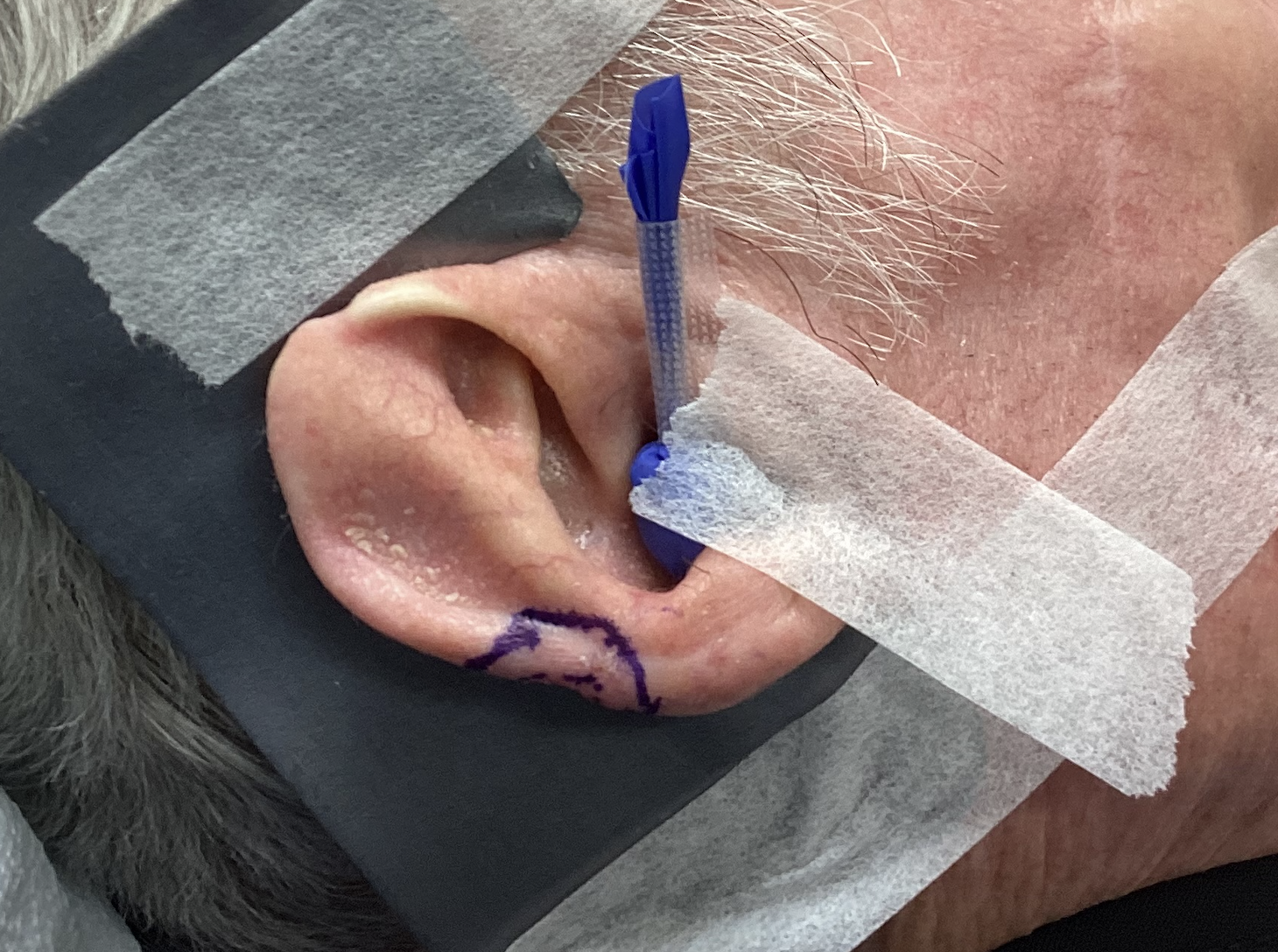
The area around the right ear properly shielded with lead.
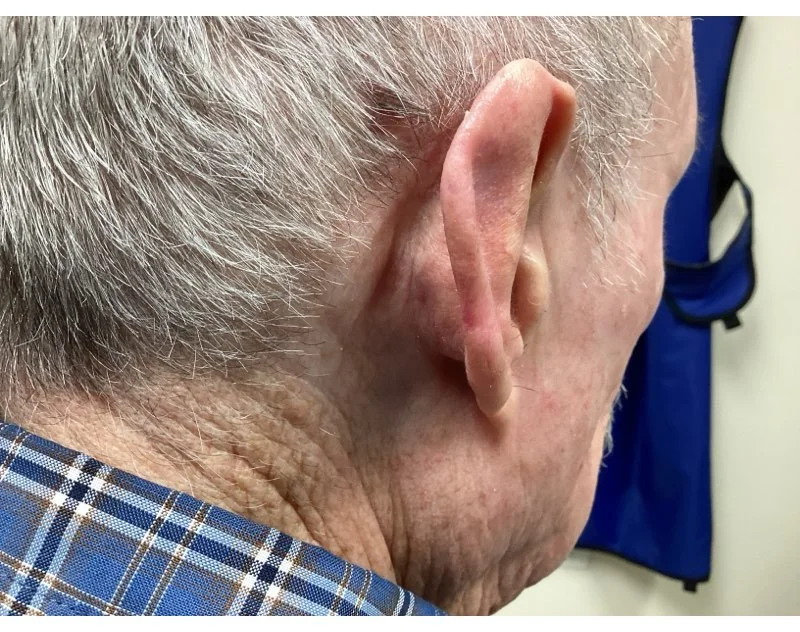
Right ear at 8-week follow-up showing a well-healed area with no sign of recurrence.
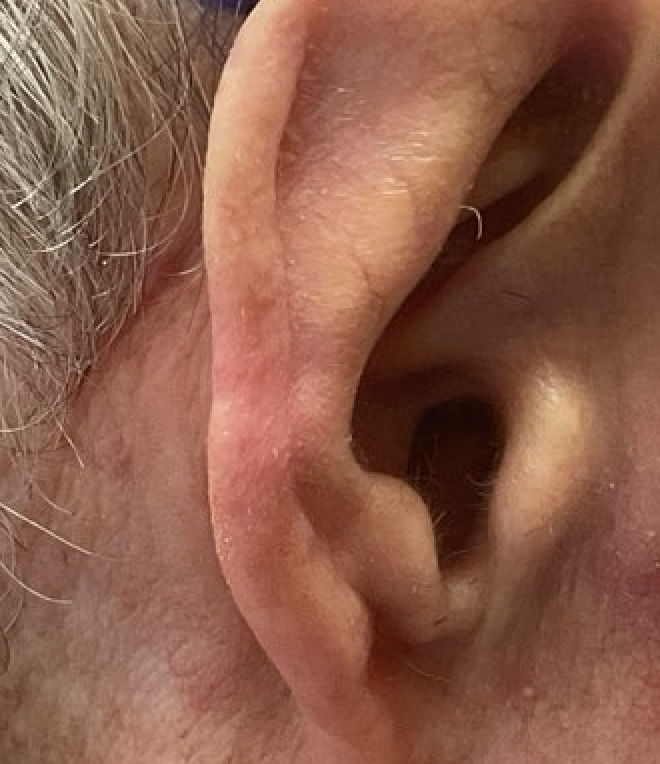
Right ear 6 months later.
